Friday, 4 June 2010

News Flash!


www.adventureflyfishinguk.co.uk


News flash! The weather has briefly broke and we were treated to a bit of long overdue rain. Well it rained for the day and the rivers rose and inch or two before falling for tea-time. Even that small amount of fresh water had the fish coming alive. Looking up stream as I passed over through the park, the pools were alive with rising fish. It has been a busy week. Fishing has taken main priority again (as it always should do), and with trips to the coast, moorland fishing and a visit from my brother and good mate roz, meant it has been a hectic week.


It was good to meet up for a morning session with local fly-fisher David Wright who was looking to get into a few Okement trout. He is a lifelong fly-fisher and also a magician. So I was hoping he would teach me a few tricks and pull a few fish out of his hat. The weather was another bright, sunny and warm morning. The afternoon was going to be a lazy day at the coast chasing mullet, and it looked like it was going to be another hot un. I met up with David by the castle and we decided to head up-stream and look in a few of the pools that we haven't had chance to fish since last season. There were plenty of midge and stonefly milling around and it didn't take David long to get the fish going. Fly choice was a simple 'F' fly. Simple to tie and a pattern that is always worth keeping in your box. He was catching fish from upstream, across, down and from all sorts of weird angles and drifts. The fish didn't seem bothered what the fly was doing. I think he had four or five fish in as many casts.
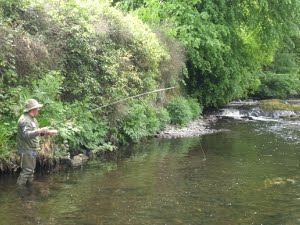


Mr Magic lifting off for another cast!


I had to leave David causing trouble amongst the trout, and as he headed further upstream I climbed out of the river and drove over to the North coast to meet up with Derrick for a crack at the mullet. He had done well at the same mark a few days prior, so I was looking forward to seeing if they were still around and getting into a few of them. Low tide was at 1:30pm and it was a bit of a rush to get over there in time, but taking a few shortcuts off from the main roads it wasn't too long before we were making our way down to the estuary. As we walked over the rocks and kelp to the edge of the water you could clearly see the tell take shapes of some big mullet cruising and rolling in the weed. With big silver flashes in front of us it was time to get a fly wet and see what was going on. Water depth at the time was about two to three feet and the fish were still spooky. It didn't take Dek long to have a couple of quick takes though, but true to form they didn't stick. I worked an area that seemed to be stuffed with fish. Again, quick takes and they were off in the opposite direction. Eventually as the tide turned, the fish switched on and they were all over the flies. We tried a variety of patterns including small clousers, nymphs and shrimps. It was interesting watching how they reacted to each type of fly that cast towards them. Some were hit straight off, some they wanted to inspect first. But as long as they were taking we were happy.


A bit of afternoon mullet action!

The session was another good one with us both managing a few fish between us. Once the tide flooded in the sport became harder as the fish pushed out of casting range and our cut off point was starting to fill behind us. I knew I had to rush back to meet my brother back in town, so I made my way over the dunes, said my goodbyes to Dek and started the drive back. So far that day, I had managed to fish from the source to the sea. Not bad for a day's work, and with my brother and friend down there was a bit more on the cards. For anyone fly fishing for bass and mullet, one fly line that is brilliant for the job is Rio's Clouser line. Designed with a similar profile to the stripper bass and pike lines, it is designed for casting flies into a wind and will defiantly help in tough blowy conditions.


The following morning we had planned on having bit of a leisurely stroll along one of the coastal paths that runs from Looe to Polperro over in Cornwall. I don't know what it is about going to Looe, but I love it. We have been going there for the past twenty years and I never tire of the place and there is some excellent fishing to be had there. Whether you want to hire a charter and go out for the sharks or congers, go on a little 2 hr mackerel trip or take to the rocks and fly fish for a variety of species! It has it all. Apart from reminding you of the old Jaws movies it also has some of the best scenery anywhere in the world. After the short drive, the first stop was to grab a brew and a cream-tea before setting off down the path. Or should I say up the path! The idea was to walk along the coastal path, and where possible clamber down to the sea and try fishing the bays and inlets to see what was around. Basically it was bit of a recce for my own fly fishing and doubled up the day with a bit of sight seeing for my brother and Roz.


The start of it all, looking down the river Looe.


The start of the walk is a nice easy wander through the old town of Looe and after a steep walk up to top of the hill, you begining to see the coastal path in the distance as it climbs and twists around the headland.


Looe Island, one of the famous landmarks.

In general, the route is easy. Overall distance is about five miles of up and down walking, but nothing too much. The beauty of it is, once the walk to the other end is reached you have various ways of getting back. You can either walk, catch a bus, taxi or boat. We weren't sure which we were going to do until getting there. If we got there too late, then we could be walking back! It didn't take long to find likely looking fishing areas. During most of the walk, the tide was still out so this gave us the perfect opportunity to get down and have a good look around.


The kind of places we were looking for! When full, these areas would hopefully be stuffed with fish.


Once you were down in the bays and coves, you could of been anywhere in the world. Well, anywhere that was stunning, hot and near to the sea. It became apparent that there would be some good cove and rock fishing to be had. There were plenty of routes down to the shore, either by path, scramble or climb. Better still would be to come in by kayak, which would give you access to all of the area. A nice gentle paddle along the shoreline and hop in for a fish and a BBQ, what more do you need!


Paddling in by kayak would be the easiest way to reach all the areas.


The further we walked, the more rock fishing we spotted!


By mid afternoon the temperature was in the mid eighties and we were sweating like pigs! So taking a break we had some lunch and I went to investigate if there was anything willing to grab hold of a fly. After bit of a scramble down a small cliff, we reached a breathtaking bay. Again the tide was still out a bit further than we wanted, but there wasn't any complaining. We chilled in the sun, grabbed a bite and had a fish.
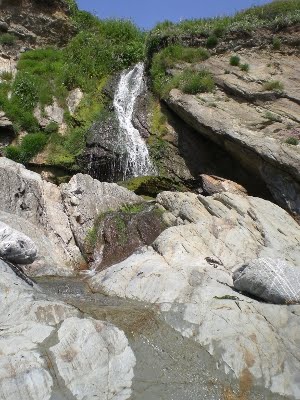


As tempting as it was, we didn't have a dip- (Apart from some Dorito's and a chili dip).


Trying not to loose my balance on the knife edge rocks.


After a full day of hiking, scrambling, casting, fishing and eating we finally reached our destination in one piece. Again, Polperro is a stunning traditional Cornish fishing village. Most famous for it's smuggling history, you can see why it was a good drop off point for the rum and tobacco runners of old.


Nearly there! Looking down into Polperro harbour.


Once in Polperro we thought it would be best to check what time we would have to leave, otherwise it meant we could have to make the same route back on foot! It wouldn't of been a problem, but Baz and Roz fancied a BBQ sometime that day, so we had to get that sorted. We had a couple of hours to kill, so we fished and chilled for the remainder of the time before setting back. The preferred choice of travel was by boat. Within five minuets of getting into the boat back to Looe, the weather changed and a sea mist began to cover everything around us! So much for the nice day!


Leaving Polperro in a cloud of crappy weather!


After the rocky boat trip back into Looe harbour we walked down to see if there were any fish moving with the turning tide. Were there any fish? The answer was yes! One of the biggest mullet shoals that I have ever seen there were crashing all over the place. Judging fish size from afar can be a guessing game, but I'm certain there were some fish over 8lb cruising around. If only I could of gotten down to them!!! True to form when we got back into Okehampton, Baz and Roz went off to fetch the BBQ supplies and we headed off in search of a midge free area. We chose a little spot next to the river where we had a quick flick and pulled out a few small browns whilst the pig bits on sticks were burning away!


Not a bad end to a perfect day! Baz on the BBQ.


www.adventureflyfishinguk.co.uk

Saturday, 8 May 2010

Out and About- Wild Style.


www.adventureflyfishinguk.co.uk


It seems like ages since I last sat down and wrote a blog! So much so, that I forgot how to log-in and spent twenty minuets pressing buttons and trying to remember pass words. Whey-hey, but at last I managed it! I'm not really a computer kind of person. I am much more hands on. Give me an old stick and a knife and there is more chance of me whittling a clothes peg than there is of spending hours tapping a key pad. But never the less, I managed to get into the system and I'm away.


I woke up this morning to find my home town of Okehampton busier than usual. Originally coming from a large city, you soon get used to the quiet life of living in a small town after a while. So when it is full of people milling around and cars queuing all over the place, you know that something special is going on, or everyone was vacating town! This weekend is the 50th Anniversary of the 'Ten Tors Challenge'.


For those who have never heard of the 'Ten Tors' before, it is basically bit of a ramble up on the moors. A quick walk to the top of a rocky outcrop (tor) in the middle of no where, probably in the rain and then back down for tea and biscuits. If any pubs are en route, then perhaps a swift half and a bowl of water for the dog. Well, that would be my ten tors challenge anyway! Unfortunately, in reality it is nothing like this. Regularly guiding and fishing on the moorland streams, I know the terrain and area well, and the kind of hard work that people have to put in to complete such a task. Each May, hundreds try to complete the Dartmoor tradition of covering set routes of either 35, 45, or 55 miles, hiking over ten listed tors over a two day period. Overseen and manned by the armed forces this is a test of endurance and pride. And like usual, it started early in the morning and will finish back in Okehampton the following night. Hence the reason for all the back-packs and walking boots on show in the middle of town. At least for once I didn't look like the odd one out!


The first tor that is usually tackled on the challenge is Oke tor, which is our local tor and an area that I know well. On one side of it runs the East Okement and on the other is the upper Taw that runs through to Belstone village. I have spent countless hours fishing, hiking, scrambling and camping around this area, and have enjoying every minute of it. I doubt the competitor's of the ten tors challenge will have the added luxury of a bit of fly fishing during their time up there, but I'm sure they will enjoy the soak in the bath on the Sunday night. Who knows it might even be worth while setting up a stall at the bottom of the road selling bath salts and blister cream. I would like to wish them all good luck with the challenge and hope that the weather doesn't deteriorate too much more for them, than it has already started to do.


Personally I'm glad of this bit of rain and cloud we are having at the moment. It hasn't rained properly here in Devon for weeks and the rivers are still on their bones. We have still been catching plenty of wild browns, but it is about time that the system had a flush through with some fresh water and start to fill it a bit more. Even in some of the usual faster flowing water, it is having a job of drifting a fly downstream. I have just returned from a few days fishing on the moorland streams. The fishing was good, but selecting the best areas for the decent fishing meant bit of a walk. Most of the level is down by about two thirds, so a lot of the usual good runs and pools were nearly dry.


Instead of making the journey back and forth to the hot areas, I opted to camp out for a couple of days and soak up the rays. Even if the lack of water was affecting the river levels and fishing, I thought I would make the most of the nice sunny weather. No doubt it won't last for much longer and the rest of the season will be fished from looking under a hood. So throwing a few items into a ruck-sac I started the walk along the lower level path from town and began to fish along the length of the Okement as it wound it's way through the woodlands.


I tried to keep the kit as light as possible taking some of the strain out of the walking. If there is a couple of you taking on the trip then it easy to off load some of the weight between you. So it was a case of a small tent, light weight summer bag, therm-a-rest, dried food, a few spare dry clothes, stove, head torch and my fishing gear. If you are new to the area, or unfamiliar with the terrain and route then a map and compass would usually come. But this is a fly fishing route that I have taken many times before, so I left the extra weight at home and typically made it back up again with more flies.


Fishing in nearly a 'dry' pool, but plenty of fish were still in there.


Due to the level of the water and slowness of it's pace, presentation was critical. Sometimes when the river is in full flight and moving at a good pace then fly choice can be anything that is a slight resemblance of the food source. But when the fish have more time to inspect a passing meal, then tippets are as light as possible, fly size is reduced to miniature and looking through the fly box, the better of the imitation patterns were tied on. The day was spent fishing, casting, searching and walking. In the end I chose to fish a team of tungsten Stone fly nymphs and searched out the deeper pockets and pools. The fish came steady throughout the day as I made my way up stream and continued out of the woodlands and onto the bottom of the moors.


By the time I found a suitable camping area for the night, I set up the tent before it went dark, and carried on fishing to the bottom of the tors for a few hours before making my way back down for a cuppa and to get some food on the go. The menu was fairly basic. A few dried noodles and a cuppa soup. The desert made it complete though. A bag of m&m's! It felt a bit like being at home!


When it comes to wild camping on the moors, there are a few things to take into consideration. The first is to make sure your camp is in a suitable area. The Dartmoor National Park Authority
have guidelines that should be stuck to. With over 130 square miles of park, common land and wilderness to choose from, there is a list of things to do and not to do.


They advise that you:


  • Don't camp in an area that will affect nesting birds or lambing


  • Don't light camp fires


  • Don't over use a site, and only stay in small parties


  • Don't have a tent pitched in an area for more than two nights


  • Avoid pitching a tent on the mark left behind by another tent


  • Leave the area as you would wish to find it


  • Don't camp on archaeological sites


  • Don't camp within 100 meters of the road, or anywhere in site of farms or houses


  • Deal with all human waste responsibly


  • Be aware of military 'Live Firing' times and dates!!!!!!

All are good tips and pieces of advice, but perhaps the most important is the latter. Check when the MOD are using the moorland ranges for live firing. It is quite common for us to bump into troops as they are training. Most times you can go ahead and do your own thing. A commanding officer or look-out will inform you and ask you to keep to a certain path or route if you are going to interrupt a training exercise. It is a two way thing. As much as the forces need to train, they will also try and accommodate you using the same area. Only last week we held up 20 Royal Marines as they waited for us to fish a stretch of river that they wanted to 'dunk' their guys into. No doubt they were glad of the break, and actually seemed interested in the fishing that was going on. But when they are using an area for 'live firing' then this is a different matter. They do have flags and markers pitched when they are out on exercise to warn people about the dangers, and you will be told to move on if you get too close. After all, you don't really want to be woken up by a mortar round going off in your campsite!


I tend to carry drinking water with me when I'm going out for the day, but when an overnight stay is on the cards then I prefer to source water out of the streams. Water weighs about 1kg per litre. So on a hot day when you could be drinking up to a litre every couple of hours, then it is a lot of extra weight to carry. All water should be treated prior to use. Even though the running streams can look clear and clean, there could be a very good chance that there is a dead sheep or something rotting away in it somewhere further upstream. Drinking water can be treated in various ways from boiling, chemicals or filters. The cheapest and easiest way is to simply boil the water before it is used. If the water looks dirty and has bits in it, it is worth filtering the bits out before boiling it up. When using stoves whilst wild camping, always make sure it is placed on a flat stable platform like a stone. This will stop it from blowing or falling over, burning the grass or burning your campsite down. Another way to treat water is to use chemicals to purify it. Most common are chlorine tablets. They certainly do the job, but taste like your drinking swimming pool water. Nowadays there are some brilliant water pumps and purifying water bottles on the market. These aren't cheap, as much as £145, but if you into this kind of thing in a big way or you need to use a lot of water at the camp then they are certainly worth looking into.

Water purification is important, take precautions before drinking stream water.


Even during this dry spell we have been having, I have still opted to wear waders. In reality you could easily stick to the banks and fish from the waters edge without having to get in and get wet. There are a few reasons why I always wear waders on these trips. The first is to make traversing the moors a lot simpler. It means that if I did have to cross over the stream to reach another part, I could simply wade across instead of having to find a suitable crossing area or hopping across slippy stones. My luck would have me going for a dip and having to spend the rest of the day wet and cold. It doesn't take a lot to start to get cold up on the moors. Especially when the sun starts to drop or when a cold breeze blows across. Staying dry is a bonus, and when you are a few miles from home and having to sleep out, comfort is still the key. Another advantage of wearing waders is protection form all the gorse bushes that are dotted all over the place. You soon realise how sharp the thorns can be when you accidentally sit on one! As much as your waders protect you from getting thorned to death, they can soon puncture so it pays to watch out where your walking and pushing through to get to the streams. The last thing you need is a leaking pair of waders. They ain't cheap! Perhaps more important is to keep covered to stop an any sheep ticks latching onto you as you kick through the grass and bracken.


Sheep ticks or Ixodes Ricinus, are ugly little creatures. They are at their most active and prolific during April to October, feeding on sheep, dog, mouse, and human blood. They look like little grass crabs and will take advantage of any passing angler. You often see day walkers wearing short and t-shirts in the summer months as they make their way through the long grass. I know from personal experience about tick bites and the problems that they can cause. One problem with them is Lyme Disease is it's flu like symptoms that can spoil a good fishing trip. Left untreated it can start to effect joints, the nervous system and in rare cases people have died. So if you are spending time in 'tick country' your always best to keep your bare skin covered. It's also worth having a check over your body before getting into your sleeping bag to check that one isn't going to have a good feed whilst you are asleep. For more information on ticks and Lyme disease check out www.lymediseaseaction.org.uk


'Happy Scratching'.


It has been nice to spend a bit of time down at the coast and get into a bit of saltwater action. Since the beginning of April, Derrick and myself have been keeping a good eye on the Bass fishing along the North Devon coast. As early as it was, there have been some good numbers of fish moving over the marks and I'm certain the sport will be hot throughout the summer. We have had some good times over there already. One fly that has still being doing the business for us is the old Thunder Creek style fly. It's easy to tie, easy to cast, easy to fish! It's still an all round winner. And I'm certain it will still be getting bends in rods for seasons to come!


Derrick setting off in search of Bass action!


Saturday, 20 March 2010

The good, the bad and the ugly!


It was nice of the weather to hold for the 'open day' of the brown trout season down here in Devon. I say Devon, but as Derrick and myself had some other fly fishing business in Somerset we opted to fish the river Exe near to Dulverton. It is a stunning part of the world, and during my time here in the South West, I was lucky to live and work here for a season. So it is always nice to get back and meet up with a few old faces and run a few flies through some familiar runs and pools. Unfortunatly we didn't have too much time to fish, so after a quick pastie and a brew we popped in to see Pat at Lance Nicholson and then drove down to the river to make a start.

Surprisingly we had most of river to ourselves which was nice. But due to the lack of water we have had of late, the river was on its bones and crystal clear. Combine this with bright sunlight we knew it would be tough, but nevertheless we were ready for it. Like a gent, I let Dek have the first cast of the season, (well he is bigger than me)! There wasn't much sign of fish activity on the surface. There was a good hatch of midge and LDO coming off, but they got away un-attacked. So to make sure we had a double chance of connecting with something 'the duo' was the set up that we first tried.


Big Dek setting up, before making the first cast...


....then like a slow whippet making his way upstream.

Apart from the elements being against us a bit, things looked good. The flies were been fished well, the correct part of the river was been fished, the only thing that slowed down the action was the lack of fish! Looking into the river we didn't manage to spot any fish, but that didn't mean that they weren't there. Adapt at living in between the stones, weed and shadows of the stream bed, you will often be surprised by the size of fish that could be hiding just under your feet. Then with one wrong step you witness a large shape dart off in the opposite direction. So with this in mind we covered all the likely looking spots and the not so likely looking spots, just to please our own mind that we covered the water and any fish. We managed a quick flurry of action prior to the sun dropping, with Derrick pulling out of a nymph caught trout and I missed a quick snatch at a dry fly as it passed overhead a small brown. We fished hard, but the fish were even harder. It won't take long for things to really get going. A bit of water in the rivers, a bit of warmer weather to get some larger hatches going, and we will be back!!


The following day, it was good to meet up and take out up and coming local chef Ollie Stevens for a few hours on his local river Okment. He is a keen still water trout angler, but wanted to learn a bit about the wild trout and wild trout fly fishing. Living next to the river for most of his life, it was a surprise that he had never really fished it before with a fly. So he was looking forward to seeing what swam in it, and more so wanted to feel the pull of a fish on a fly rod. We started off on an easier stretch of the river. This was to help get Ollie confident in wading and practising a few of the various casts and mends that he would be using throughout the session. He was pretty good from the start. A few tweaks here and there and the odd reminder to keep him on track and he was away. Learning the difference of how a line works on moving water, and how everything effects the drift of the fly was the main point to get across. Unlike the still water trout fishing that he had done in the past, it was down to him to keep the fly moving as natural as possible by manipulating the rod leg of the fly line in conjunction to what the water was doing.


Ollie taking his first steps into running water.


Before long we came out of the flat stretch and made our way from town to the bottom of the moors, searching and fishing along the way. It was good to take Ollie out due to his enthusiasm for the sport. He was always asking questions, wanting to learn about the aspects of the set-up, fly life, fish behaviour and the art of fly casting. It is good as a guide to work and teach someone with enthuisiam and someone keen to learn and it wasn't too long before he was watching trout chasing after his small nymph and slashing at the dry fly. Hooking into the fish was another matter. But like I mentioned to Ollie at the time, a lot of this comes down to experience of hooking and loosing fish, knowing when to strike or when to let the fly to continue down stream.
The closer to the moors we got, the more the weather started to deteriorate. No surprise here, but Ollie didn't mind so we continued our way upstream. As the rain fell harder, we crossed the river and ducked into an old mining cave where we fired up a brew. There are quite a few of these ancient caves dotted around the moors and next to the rivers, and can be a welcome shelter when the weather turns. It was good to sit in the door way watching the rain hit the river and chewing the fat. But we decided to yomp up river to one of the high pools before the river started to rise. Within a couple of hours these small streams can soon colour up and become unfishable, so it was a race against time. Within half an hour we were standing at the base of the tors where the river was still running steady but started to stain, and Ollie began to fish eagerly to hook into a fish.


Ollie putting the lesson into practice.

With plenty of rises, quick snatches and missed takes it was good to watch Ollie connect with a nice fish. He had worked hard to land it and the smile on his face said it all. I just want to wish Ollie luck with his new found skills and hope to catch up with him again soon for another day. Who knows, he might return the favor and teach me how to cook!

This is what it is about. A stunning wild brown trout.

Just before I finish off this blog, I just want to say 'Thanks' for a few of the kind phone calls that I have received. For those who know us at 'Adventure fly fishing UK' will know of our little team mascot and buddy, 'Ratz'. Unfortunately she passed away yesterday after years of nibbling, stealing and playing with our kit and tackle! Born into a life of fly fishing she perhaps knew more about the textures and tastes of fly fishing gear than any fly fisher alive today. It is a sad time for us here, but true to form she had a little ratty funeral and was buried next to the river where I often cast and fish during my free time. On a posative note, at least I should get a bit more time from a fly line now! But she will still be missed.


R.I.P 'Ratz'- 2006-2010.

Tuesday, 9 March 2010

Ready or not, here it comes!


www.adventureflyfishinguk.co.uk


As the old saying goes, time, tide and trout seasons wait for no man. At last the opening of the season can be counted down in days instead of weeks, and it seems that we have been preparing for this forthcoming season since the close of the last one. The rivers and streams are looking good. A bit on the low side maybe, but I would prefer this compared to a flooded river on the day. Fingers crossed that we don't have buckets of rain prior to the big day. Our original plan was to get out for a few wild trout up on the moorland streams, but due to a meeting later in the evening we have opted to fish up country a bit and cross over the border into Somerset.


It was good to catch up with Derrick at the weekend. He has been busy sorting his kit out for the season and it was only right that he brought it down to play around with. We often get asked why we have so many different types of rods and fly lines? This is mainly down to two reasons. First, and most important is the type of fly fishing it will be used for. We tend to have a selection of rods dependant on the species of fish that we are hoping to catch, with different lengths and line ratings (AFTM) designed to cast and handle different sizes and styles of flies. For example, you would be hard pushed to cast a 2/0 pike fly on a #3 fly rod. And vice-versa, it would be a massive overkill to cast a size 18 dry fly with a #9 fly rod. So everything is in proportion with the style of fishing that we are doing at the time. Rod length is again determined by the style of fishing. On a small overgrown stream, a rod that is too long will end up getting caught up in the bank side vegetation and trees whilst casting or walking. On a wider river when fishing longer lines or perhaps when Czech nymping, then the extra length of rod will aid line and fly control, and enable easier mending.


The second reason for having a wide selection of rods is 'Why not?'. Deep down I think most fly fishers are tackle tarts. We all like to get our hands on a new rod or reel, cast a new fly line or step into a new pair of waders. We may not have needed them, but we still ended up buying them! Derricks new choice rod is the Vision Cult 8' #2, matched with a Rio Gold fly line, which is perfect for the small moorland streams that we will be encountering.


Derrick practicing a few trick shots with his new rod!


At one point he let me have a go, but soon had it back!


With this bit of nice weather we have been having of late, (apart from the cold breeze), I decided to have a ramble over the moors and see where I ended up. I'm glad I did. I know there is some stunning fly fishing to be had on most of the Dartmoor streams. Get the weather right and your blessed with it all. OK, your not going to break any records for the size of fish you will catch, but this isn't what fly fishing is about in my opinion. If you want to catch a monster fish, then you have to fish water's that hold monster fish. These streams hold small, wild trout. If you catch a 10" fish, then this is your equivalent of a 20lb pike or a double figured trout from a big fish water. If you are into wild fishing for wild fish, in a wild location then this is the place.


Wild water, wild fish, and wild times ahead.


It was nice to see a few fish on the feed. Unfortunately they were still safe for the time been. Due to the pH level of the streams, food is often small and at certain times sparse. But saying that, there is more food in these streams than a lot of anglers give them credit for. As I have mentioned in past blogs, fly selection isn't anything complicated. The majority of food in the higher reaches of the stream tend to be small flies such as midge, stoneflies, sedge and small olives.


A typical, non discript parachute pattern. Used in a
variety of coloures and sizes will be productive all season.


When to go and fish high up on the moors is down to the angler. Most often choose to wait until things warm up slightly. I don't blame them, it can sometimes be quite a bleak place at times. But I prefer to target these waters before it gets too warm. As all anglers know, high temperatures, low skinny water, bright sunlight and the fish will seek shelter and wait until later in the day before they show themselves in numbers. But with such stunning scenery it is always nice to work along a stretch of stream and find feeding fish. Even if the fishing is challenging it is always a pleasure.


With scenery like this, it is never a chore searching for fish.


For anyone wishing to try their hand at a bit of wild trout fly fishing we will be running regular tuition and guiding days for those who fancy a chance of a wild fish. Alongside the regular tuition that we do at 'Adventure fly fishing UK', we will also be running a series of Bass, Pike, Beginner and intermediate fly fishing open days at various locations throughout the South West. For more information please feel free to get in touch or drop us an email.


The kit is ready, the season is nearly here, don't forget to
get yourself a new 2010 rod licence.


www.adventureflyfishinguk.co.uk


Sunday, 24 January 2010

Dryz a bone!


www.adventureflyfishinguk.co.uk


When it comes to catching fish on a fly, the most exhilarating way has got to be on a surface fly. Whether you are stripping a popper back across the surface for bass or pike, or drifting a small dry fly down stream in search of a big old brown trout, in my opinion the visual way is the best way. One second the fly is minding it's own business as it works the surface, the next a big gaping mouth opens behind it, and all hell starts to break loose. It still get the heart pumping as you watch a huge fish turn onto your fly and suck it in. Don't get me wrong, I enjoy the pull on a line that a subsurface fly gives when it is taken, but the added attraction of seeing what is going on is always a winner.


Like a missile, a big pike chases a surface popper.


With the new trout season around the corner, I thought I would have a blitz on tying a few flies. Not only do we get through them during our own fishing, but we always like to make sure we have enough for our guests and friends that come down to us for tuition and guiding sessions. If I don't get them sorted now, then next week will be a busy week. We have got a few days pike and grayling fishing lined up in Somerset, and by the time you get in late your not always up for an all-nighter behind the vice. So I decided to get things underway and make a start. I must be getting wiser as I get older. I usually fly by the seat of my pants and tie as they are needed! Or maybe it's because I am sitting here with a kidney infection with nothing else better to do.


It has been nice to have a bit of settled weather of late. It has seemed like spring has been trying to poke through. I'm not to sure how long it will last though, so regular casting and recce trips have been made along our stretches of rivers and streams to keep an eye on what is going on. There have been quiet a few natural flies showing themselves and plenty of trout have been spotted hanging around. Even during 'Britain's Big Freeze' or whatever they called it, we were still seeing flies buzzing around. Most were midge that are often found all year around whatever the conditions. Give them a small opening of warmer temperature throughout the day and they are always out and about. I think out of all the cold weather we had, there was only one or two that I didn't see any fly life at all. What was a surprise was seeing a couple of Large dark olives coming off whilst the air temperature must of been about -5 degrees. Something must of felt right for them to take flight. The rest had more sense and decided to hold tight until it warms up a bit.


With a batch of Varivas hooks arriving, I opted to crack on with some dry flies. Not only will they stock up the boxes for the forthcoming trout season, but hopefully they'll have a few grayling hanging onto them next week!


aff-UK 'fly lab', where magic or usually a mess is created!


Most of the dry flies that I use nowadays tend to be parachute style. This is for various reasons, but especially for the way that they sit in the water. Unlike a lot of traditional shoulder hackle dries that tend to sit high on the surface, parachute dries hold lower in the film giving it a much better footprint. Even in fast flowing streams, if the fly isn't sitting right it can still be rejected. A parachute fly is a stable fly which seems to land better on the surface and drifts well in both slow and fast flowing currents. So it is perfect for a lot of the wild trout fishing that we do on our moorland rivers.


A swarm of parachute flies ready to get chomped!


Probably the most famous parachute fly throughout the fly fishing world is the trusty 'Klinkhamer'. If you are going to tie a fly that has a reputation like the klinkhamer, then it pays to see the proper way to tie it. Check out Hans Van Klinken's website www.danica.com for the tying and history behind it. I have my own way of tying a similar pattern, but I like to add a tail to some of the flies and use CDC for the post. Colour and size are determined by the natural food that is floating down stream. It pays to carry a good selection to allow you imitate the footprint and shade of the natural flies that come off your rivers, or even still waters. Parachute flies are as deadly on both types of waters.


A typical parachute fly, size 20 for our moorland and river trout.


Dependant on the style of fly fishing that we are doing or the request of our guests, will determine how we use the dry fly. Like I mentioned at the beginning of the blog, visually watching a fish rise and suck your fly into it's mouth is the way to go. So when the fish are on the rise and feeding on surface flies, then we will usually fish a team of three dries. When the fishing are taking both emerging and emerged flies, then again a few parachute flies will be attached to the leader. One of the most common set-ups for the parachute fly, is to combine it with a nymph. Known by various names such as 'New Zealand dropper', 'Klink and dink', 'The duo', they are all the same method, that hangs a weighted nymph underneath the dry. This does two things. One it gives the fish two bites of the cherry. Some will hit the nymph, others will rise to the dry. Or simply the dry fly is pretty much used as an indicator and sets the depth for the trundling nymph. It is also good way to prospect a water when there isn't much surface action going on. Again you will be surprised what is lurking under your fly. One minuet nothing, next you are buckled over and trying to stop a fish from diving back into cover.


A few bits and a 'duo set up'.


When it comes to my own dry fly fishing, I always like to spend the extra time to get things right. If it doesn't cut into your fishing time too much, then it's always worth the effort. First is to use the correct lenght and diameter leader and tippet. I tend to opt for a co-polymer and flexible tippet. This will allow for a more natural movement of the fly, that in fishing practice should entice the fish more instead of a last minuet turn away. I always like to dress the tippet with a sinkant of some description. Even in faster flowing water I still like to have to tippet leading to the dry fly sunk under the surface. We have spent loads of time trying untreated and treated leaders, and found that the more discrete tippet fooled even the most line shy fish. Last is to use a decent floatant on the fly. Most people tend to use Gink for this job. Personally I have changed to 'Loon Aquel' after years of use. Gink will keep most flies floating, but it has the problem of going hard in the cooler temperatures and sometimes gives a slick off when the fly lands on the water. Giving the leader a quick stretch before making the cast will also help land the fly further away from the fly line. I have witnessed it countless times when a coiled leader lands on the water and spooks fish as it drifts over them. Also with the added slack in the leader, it can also be tricky to set the hook in time before it is spat out.


Hopefully with everything set right it will help to get a few more fish out. You still always manage to spook or miss a few but that's fishing. Again, making sure you have a stealthy approach will help just as much as a decent set up. There is no point in spending your time tying the perfect fly, setting the leader up and finishing everything off nicely, only to alert the fish when you get in the river. Gravel crunch is one of the first indicators to the fish that you are in the area. So watching where you put your feet is a must. If I could get away with it, then I would opt for not using studs in the soles of my wading boots. But with the kind of rocky ground that we have in our Devon streams it can be like walking on bowling balls and ice.


The thing that I love about wild trout fly fishing or river fly fishing in general is the mobility factor. I wouldn't say I'm an impatient angler, but If there are a few miles of river to fish then I will try and get as much of it covered as possible in a session. This could take one or two days, but I like the challenge. You don't get much freedom in life, so when your faced with an open stream and a few hills to walk over I'm in my element. I'm not one for getting out of the car and dropping into the first run that we stumble across, (unless its a good one). I prefer to travel light and get up to some mischief. Only experience can really teach you what to take, but most importantly what to leave in the car. We have all made the mistake of carrying unnecessary stuff with us. Trying to clamber in and out of the river with pockets bulging with fly boxes, spare spools and lines, zingers draping all sorts of iron works, over sized nets that get caught up on everything and a couple of spare rods. Dependant on conditions, if it doesn't fit in a bum bag or help to catch fish then it doesn't come along. The trick is not to buy things with too many pockets or compartments. For some reason if we have them, we seem to have to fill them. In my next blog, I will write a short piece about the kind of gear that comes along with us. I recently had an email asking about chest packs and lines trays. Both have their positive angles, but can make things awkward for both wading/walking and fly casting. Again I will try and fit a bit in about the pros and cons of carrying them. Till then, tight lines! Roll on the fishing.


www.adventureflyfishinguk.co.uk

Saturday, 9 January 2010

Better safe than sorry.


www.adventureflyfishinguk.co.uk


We all have to admit that in today's crazy world of health and safety it has all gone a bit too far! Kids can't play conkers unless they wear a crash helmet, if its dirty you can't go in it, if it's slippy you can't go on it. The same applies to fly fishing. When I started down the road of becoming a fly fishing instructor and guide, the first series of exams that I undertook (Level II) seemed more interested in knowing what I knew about health and safety, than it did of fly fishing skills, teaching and communication skills. We all know that if we fall into water or slip on a muddy bank that there could be consequences. But I am a firm believer in common sense and practice over paperwork. If I remember correctly, one of the questions was something to do with walking across a fishery car park and the nearest fire escape! Not, how would you teach an angler how to safely get out of a river if they had slipped, or how would you manoeuvre a boat to a jetty facing an on shore wind. Or how about tides and times, and when it is safe to take people.

At Adventure fly fishing UK, we understand the importance of the safety of our anglers and guests who visit us us for fly fishing tuition and guiding. Whether fly fishing from the shore or afloat nothing is taken to chance. As AAPGAI instructors, you won't usually see the preparation that goes into a day with us, because all that we want is for you to be focusing on day. Not worrying about safety or finding the fish. That is our job. One side of fly fishing that is really booming at the moment is fly fishing for pike. With many fly fishers targeting them on some of the large trout waters and big lakes, most anglers will be looking for them from a boat. On the whole, fly fishing is a safe sport. As long as you wear a hat and glasses, pay attention to the conditions, surrounds and don't fall in then you should be back for more fun. The same applies when fly fishing from a boat. The only other factor is your afloat.


As a life long angler I have spent my fare share of time in a boats. Most of it has been spent on the large lochs and loughs of Scotland and Ireland. Many of my local fly fishing venues also had boats and I often preferred to fish from them, than fishing from the bank. This was due to fish location, restricted casting or shear laziness. So over time your own awareness of what is safe and what isn't soon sharpens. It is fare to say that there are a lot of people out there who go out for the first time, and you wonder if they will return! This was brought home to me when I used to managing a large still water trout fishery in Somerset. We would often have to go and tow boats back in that had run into trouble, repair damaged props and keels, ensure life jackets were worn, remove rod tips and line from around the props and even had to drag an angler into a rescue boat that had fallen in. Its easy to hire a boat for the day and set off on your fly fishing trip, but by paying attention to a few important points will make it a lot smoother and safer.


Fly fishing from boats is very popular, but a bit of
knowledge and know how will be a big help.

As I mentioned earlier, fly fishing on large trout venues and lakes is getting very popular. Most of these waters have their own safety policies and will maintain and check boats are in good working order and decide whether it is safe to go out or not. When fishing on large unrestricted waters, then it is down to the angler to make these checks and asses the danger. It doesn't hurt to have some kind of powerboat training, which will teach you about weather forecasts, navigation, boat preparation, boat handling and manoeuvring, self rescue, and engine maintenance. This may all sound a bit OTT, but once you have learnt all about it you will be surprised how many scrapes it will get you out of. These are regularly carried out at RYA centers throughout the country.

The last thing we want as a tuition and guiding service is to floating around like idiots waiting to get rescued or waiting until we drift into the bank. When people are paying good money to spend the day bent into fish, they don't really want to get towed back in behind a safety boat, looking like the Chuckle brothers!! It may be worth asking the guys who are taking you out if they have any kind of boat training. I am not saying that it is paramount, but i would be more confident if I knew the guide in charge of the boat knew what they were doing. I have even been out to rescue so called 'celebrity anglers' when they have got into trouble, and I know Derrick had to send a chopper out to rescue another celeb from the coast. I'm not going to mention names, but maybe they ought just stick to writing about it. Saying that I never read about the trouble that they got into. Only how good they were and how many fish they caught. Funny that!

When thinking about taking a boat out, the first thing to consider is the weather. On the flip side of rough, windy weather there are those blistering hot days. You often see pale anglers setting off in the morning, only to return in the evening looking like a boiled lobster. So it pays to carry everything that you think you will need throughout the day. There is usually no nipping back to the car. As well as all of the fly fishing tackle, we always carry a 'boat bag'. This is easily stowed away under the seat of a boat and will help us in any situation. First things first is you own protection. Just like bank fishing we always advise on wearing a hat and glasses, but when afloat a floatation device is also a must. I'm not going to get into the debate of whether it should be a 'self inflating' life jacket, a manual or a buoyancy aid. My personal choice when in a boat is a buoyancy aid. This is only because I'm lazy and once its on its on. I don't have to worry about checking it for leaks, changing cartridges, have them going off in the bag, or putting a hole in it. The only advantage of a self inflating life jacket is it will go off when submersed in water, then right you up so you are not floating face down in the water. But when fishing in pairs this doesn't tend to be much of a problem.


When afloat always make sure you wear protection.
(Hat, glasses, and a buoyancy aid). The fish is optional!

Apart from making sure you are safe from stray flies or falling in, it is also vital to make sure that your boat is going to get out and back OK. Checking that it isn't leaking is always a winner. The last thing you want to do is spend the day bailing it out, instead of fishing. If you are using a boat with an outboard motor, check that there is enough fuel for the day and there is an alternative method of propulsion i.e. oars or electric motor. All motors vary in controls, so if you are unfamiliar with the type of engine play around with it for a while before setting off. Run the engine for a while, checking that the tick over is right and the fuel is running through it OK. Look over the back of the engine and check that the exhaust is working and spitting water out. Check that the engine can be pulled up and dropped back in and out of the water, and most important check that the kill switch works and you have the kill cord. If in doubt, don't go out. A lot of anglers are happy letting the cord dangle from the engine whilst they set off. But for the sake of clipping it around your leg it will make all the difference if you fall over. Used correctly, it will kill the engine and you can clamber back into the boat. Leave it dangling from the engine and the boat will blast off into the distance leaving you to swim for it.


Carry spares, repairs and other bit and pieces in a
waterproof boat bag, that is easily stored under the seat.

In our 'boat bag' we carry a range of items that will help us to have a good day even if there is any small glitch.


My own PFD, with room to carry plenty of bits and bobs.


Navigation equipment, maps and charts.

There is no better substitute than knowing your water first hand. But it is always helpful to have a map of the water, to plot shallow areas which may ground the boat, to check for likely looking holding and feeding areas, or simply to get a better understanding of the area you are floating on. A GPS and compass also comes aboard to help with plotting holding areas. These may change as the season progresses, but if in spring you are picking fish up in a certain area, then they move somewhere else in the summertime, then again throughout autumn, it helps to plot these areas for future reference. One piece of kit that I also like to use is a sounder. Usually called a fish finder, and often frowned upon by a lot of trout anglers. Our main use for it is for working and finding contours. Again it will show us the depth and shape of the lake bed, and has saved us from grounding the boat on several occasions over the years. This is a lifesaver when fishing on some of the remote lakes, where it is possible to be cruising over 100ft of water one minute then 2ft the next as you pass over a sunken island. This gives us time to make adjustments of the cruise and steer around it in time.


Rescue and first aid kit should also be carried.

If someone was to accidentally fall over the side of the boat, then it pays to have something at hand to pull them back. If the boat is anchored then a hand, landing net handle or an oar should suffice. If the boat is drifting or the person is moving away, then a throw line a throw line will do the job. No kit would be complete without a reflective blanket! If it is cold, then wrapping the person up should keep them warm until you can get back to shore. First aid kits can be cumbersome. But when your on a boat it doesn't really make that much difference. It isn't very often that I have had to use one, but when fly fishing for fish with sharp teeth, you get the odd knick every now and again.


Pike like to get their own back every now and again!


A few spare items that are sometimes missing or broke.

It can be a pain if you turn up and there are a few things missing. Spare rowlocks and a bailer have come in handy a few times over the years. If they aren't missing then they are sometimes damaged and may need replacing to get back. There is nothing more frustrating than finding the kill cord missing. Without it, you will have a job to keep the engine running. At least if you have a spare (for the right engine), you can still get out and crack on with some fishing.


The last few bits that we take are a knife, leatherman, screwdriver, head torch, cord, cable ties, shear pins, spark plug and a spanner. I know it may sound like we are rebuilding the boat, but most of this stuff doesn't get used from one season to the next. It is with experience over a long time that dictates what I now carry. After snapping a rowlock whilst rowing across loch Lomond, I decided to carry spares. After loosing the kill cord and having to row back along rutland, I got my own spare just in case, and loosing the bailer whilst having a pee, meant we had to stand in a foot of water during a torrential storm on LLandegfedd as the boat filled up. There was stuff and gear floating all over the place. So as the old saying goes 'once bitten, twice shy'. Now we are more prepared for all our trips. With most of the boat fishing done on freshwater in search of trout and pike, then these kind of commercial fisheries will have fishery workers who maintain the boats and jetties. So 99% of the time every will be good. If there are any problems with a boat it is just a case of swapping it or getting it put right before you go adrift. When hiring boats on small fisheries or wild waters where they only usually have the odd boat or two that can get neglected, may get a bit of 'boat bag' treatment. I'm no kind of formula one pit crew guy, but I can just about keep a boat limping along when it should be been towed in.


www.adventureflyfishinguk.co.uk

Tuesday, 5 January 2010

Making the most of it!


According to the weather forecast, it is the coldest winter for thirty years. They say it has something to do with high pressure over Siberia, causing freezing winds and heavy snowfall all over the UK. I noticed this when my car got stuck in snow and had to walk about 8 miles back to home. It does prove that it sometimes pays to be prepared. One inch of snow in this country and it has had it! The whole place comes to a stand-still and local councils can't seem to cope with sprinkling a bit of salt on the roads. Good job for the council tax that gets paid to them every month. We have to keep the boys topped up with brews and biscuits whilst they sit around depot. When they have run out and the thaw starts, you begin to see them on the road firing grit all over your car!


So what do you do? You can sit in the house watching telly, better still tie a few flies, or even better, get out and make the most of it. Leaving the car where it was, I decided to get out for a bit of casting practice as normal and then have a stroll down to look at the river. One thing that I enjoy about this time of year is been able to see more of the river and its surrounding areas. This can help during the fishing season when overhanging trees are in leaf and the bank side cover is disguising the shape and features of it. Knowing where likely looking holding areas are will help when the river drops back and the vegetation starts cover the area again. Whether you can get a fly into the area is another story. But that's the fun of wild trout fly fishing.


Looking upstream a cold and bare West Okment.


Searching for new smaller feeder streams running in to the main rivers can also be interesting. Many of the streams that come off the moors are often topped up with the help of run-ins and feeders. These then can hold into small streams and pools which can hold trout in quite good numbers before reaching the main river. These can often be located on OS maps or by searching for them on foot. Unfortunately during mid season these areas will often be unfishable due to the overgrowth. So finding these areas during the bald spell, will always be worth a look early season before the cover gets too thick, making casting a fly impossible.


One of the many feeders that run off the moors into the Okment


By mid summer, these areas will be overgrown and unfishable.
Well worth a visit early season.

Woodland cover will also be thinner, so tracking the river will be easier. I've ragged a few wading jackets scrambling through thick trees, bushes and gorse in the summer, so only having to make the odd duck to miss a branch or two means you can keep can eye on frozen patches of marsh that love to suck the boots off your feet. Walking is fairly easy. The cooler temperatures and lack of flies is a bonus for a start. Sweat loving flies that swarm around you in the summer soon get on your nerves. At least this time of year they will be hibernating somewhere I think! So all that you have to do is concentrate on not slipping over.


Make the most of thinner woodland cover to check
out harder to reach parts of the river.

If you do decide to go out in the sort of weather that we are having at the moment, make sure you are prepared. You may think its bit of an overkill having to carry spare clothing, stove, map, compass and a shelter when making a trip that you usually make in shorts and t-shirts during the warmer months. But when you are high on Dartmoor the weather can soon come in. Preparation and having the right kit with you will make things easier and safer. The same applies when fly fishing on the moors even when the weather seems good. Knowing how to get off a moorland stream and back down in thick fog is always worth learning. Nowadays you can pick a GPS up for around £70. These are always a winner when searching new areas for plotting grid references, but also a lifeline when the weather blows in and you can't see where to go. This is especially true if you start to track off river and go overland in search of another stream. If the weather starts to close in whilst tracking a single river, then it's just a case of walking back along it until you know where you are. At Adventure Fly Fishing UK we also use GPS on some of the larger still waters that we often work and guide on. Sometimes they have helped us back to shore when the weather has turned bad, other times for 'marking' holding areas of fish. I remember a 10 mile trip back through thick fog and rolling waves of Lough Derg in Ireland. If it wasn't for a GPS it would of meant spending the night on a island. But using the track back feature, it directed us straight back to the jetty.


Not standard fly fishing kit, but useful in bad weather
or for plotting fish holding areas.


As I am writing this the snow is falling even harder than the past few days. I might even get out for a spot of winter camping when it settles a bit. If not I will get a few flies tied. Beats sitting around watching the telly!


Taking the easy path to the camp.